
Garage Door Repair in Allendale
Garage Door Repair for Allendale's 1966-Era Homes
Allendale homes built around 1966 still carry original torsion hardware. We drive the 3 miles from Wyckoff to fix springs, openers, and tracks made for that era.
- Licensed & Insured
- Same-Area Service Calls
- Upfront Pricing
What Happens When You Call
-
1
Call or Request a Quote
Tell us what the door is doing and roughly how old the house is - that alone points us toward the likely part before a truck leaves.
-
2
On-Site Diagnosis
A tech checks the spring, cables, tracks, and opener in person and tells you plainly what is actually wrong.
-
3
Straight Price, No Surprises
You get a number before any work starts. It covers parts and labor, nothing added after the fact.
-
4
Fixed the Same Visit
Most repairs are done in one trip. If a part needs sourcing, we tell you that upfront instead of guessing.
Can You Do This Yourself
If your garage door in Allendale is original to a house built around 1966, you're dealing with hardware that predates almost every DIY tutorial online. Torsion springs from that era were often sized differently than what big-box stores stock now, and the drums and shafts can be metric or non-standard depending on who installed them. Swapping a spring on a door this old without knowing its wind and wire gauge is how people end up in the ER.
Bolting on new rollers or a new bottom bracket is fair game if you're handy - that's low-risk work. But cable replacement, spring adjustment, or anything involving the torsion bar on a door this age is not a weekend project. The parts don't match new-door instructions, and guessing at spring tension on unknown-age steel is the single most dangerous mistake a homeowner makes with this equipment.
We'll say plainly: if you're not sure what year your spring is, don't touch it. That's the one limitation we're upfront about - we can't diagnose spring wind or cycle count over the phone, and neither should you try to guess it yourself.
How Long It Takes
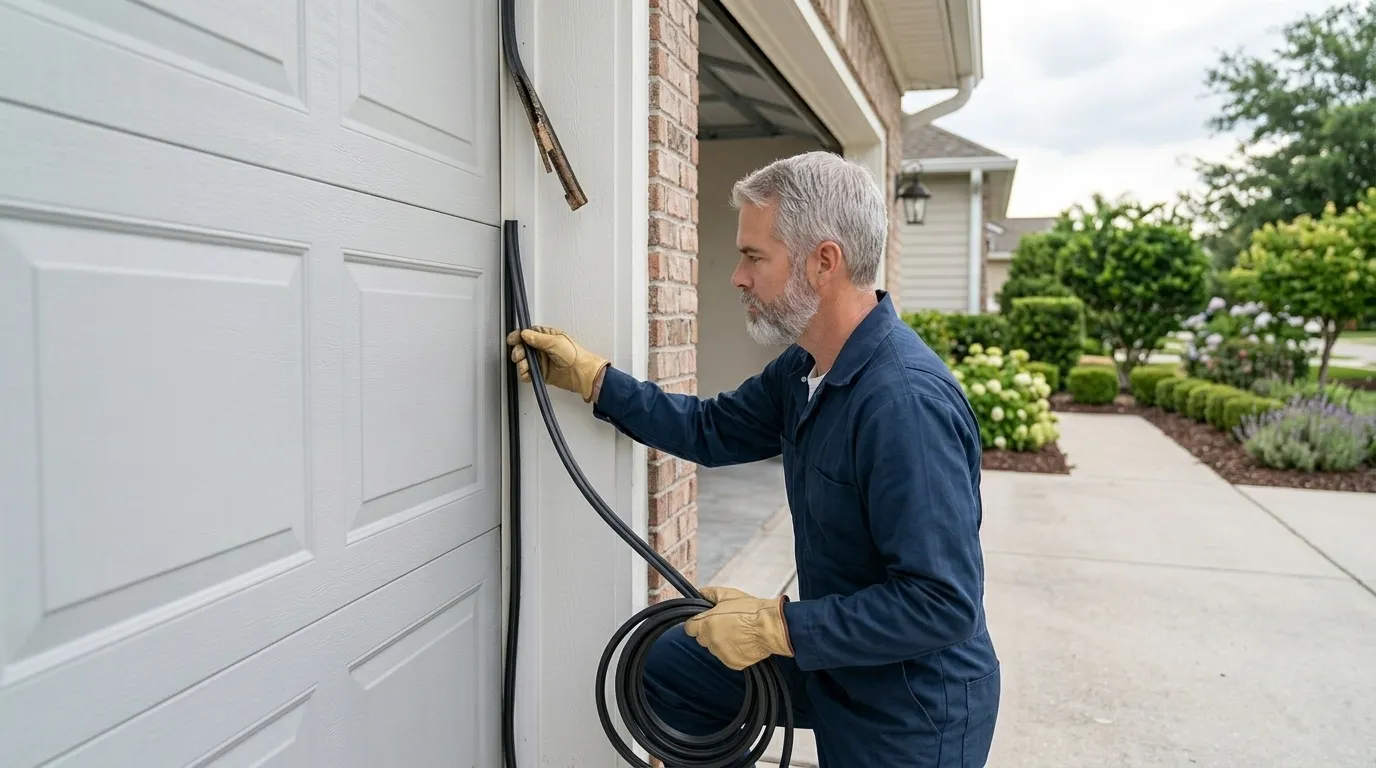
We're based in Wyckoff, three miles out, so travel time to Allendale isn't the long part of the job - diagnosing hardware that's pushing sixty years old is. A straightforward spring swap on a door with known specs is quick work. A door where the springs, cable, and drums are all original to a 1966-built house takes longer because we're measuring and matching parts that were never designed to be interchangeable with today's stock.
Openers are usually the faster fix: if the unit isn't original (most aren't, since chain-drive openers from that period rarely survive this long), we're working with modern parts and modern wiring, which speeds things up. The slow part is almost always the track and spring system when it's original - not because the work is hard, but because getting the right torsion spring means confirming door weight, drum size, and wind direction before we touch anything.
How It Shows Up
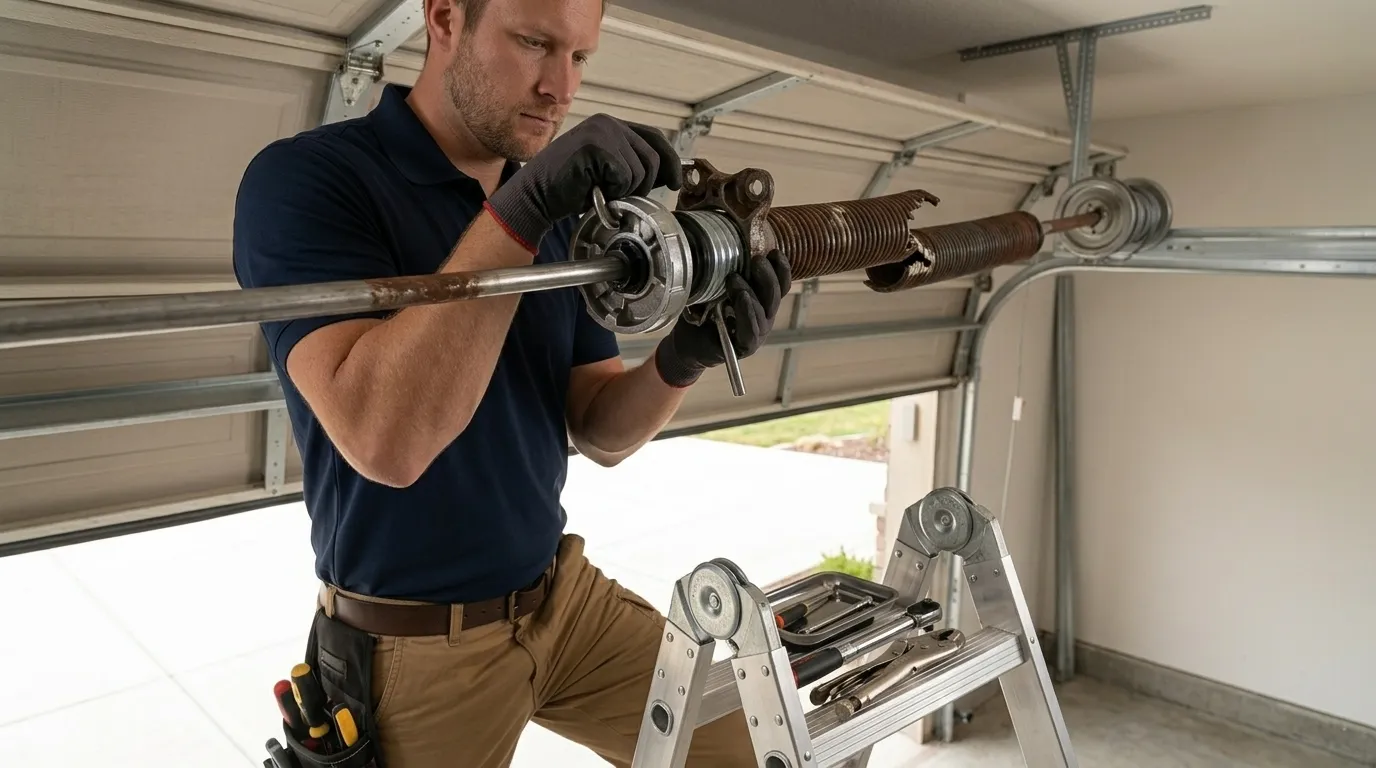
On a house from the mid-1960s, the failure pattern is consistent: a torsion spring that's never been replaced finally gives out, usually on a cold morning when the steel is stiffest and least forgiving. You'll hear a loud bang from the garage, or the door will refuse to lift more than a few inches before the opener strains and stalls. Track misalignment is the other common one - decades of settling on an older slab can shift the vertical track just enough that rollers bind or jump the rail.
If the door drops unevenly, one side lower than the other, that's usually a cable or a spring on one side letting go while the other still holds. None of this shows up gradually most of the time. It's fine, then it's not, and that's the nature of steel components running past their expected service life.
Getting It Booked In
We run this call from Wyckoff, three miles from Allendale, so there's no separate branch or local dispatch to coordinate - one truck route covers both towns along with the rest of our service area. When you call, tell us the approximate age of the house if you know it; on original equipment from the 1960s, that single detail tells us more about likely spring size and drum type than a description of the symptom does.
If you know whether the opener has ever been replaced, that helps too, since original chain-drive units from that period behave very differently under diagnosis than a newer belt-drive unit bolted on later. We don't keep a stocked branch in Allendale itself, so what we bring depends on what you tell us up front.
Why This Fails Locally
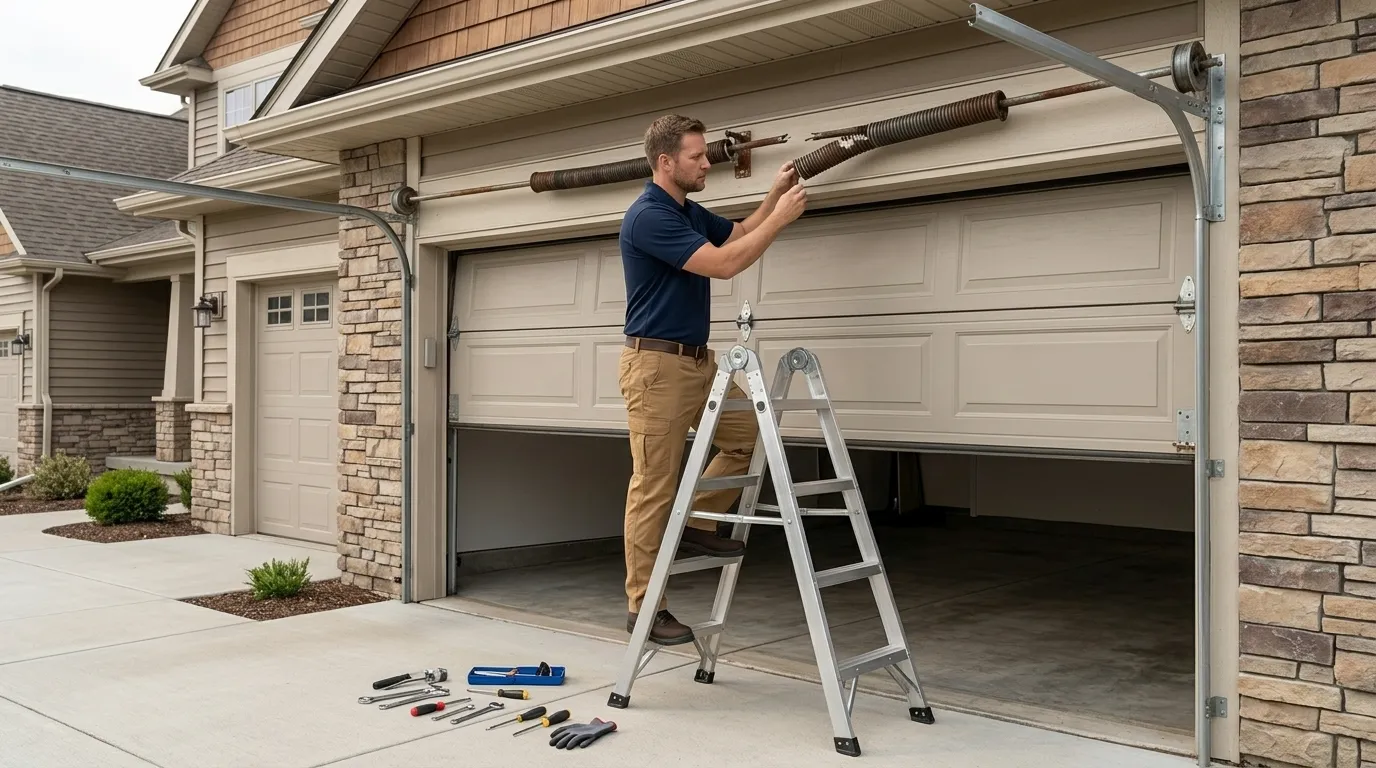
Allendale's housing stock centers on 1966, squarely inside the wider 1938-1996 range across this service area, and that means a meaningful share of doors here are running on hardware that's never been touched since the house was built. Add a cold, severe winter climate to that equation and you get a specific failure mode: steel torsion springs lose tensile give as temperatures drop, so the coldest mornings are exactly when a spring that's been slowly fatiguing for decades finally snaps.
This isn't a universal problem - newer installs and already-replaced hardware don't have this exposure - but on a street of original 1960s builds, cold-weather spring failure is the single most predictable call we get. It's a function of age meeting climate, not bad luck.
What the Repair Takes
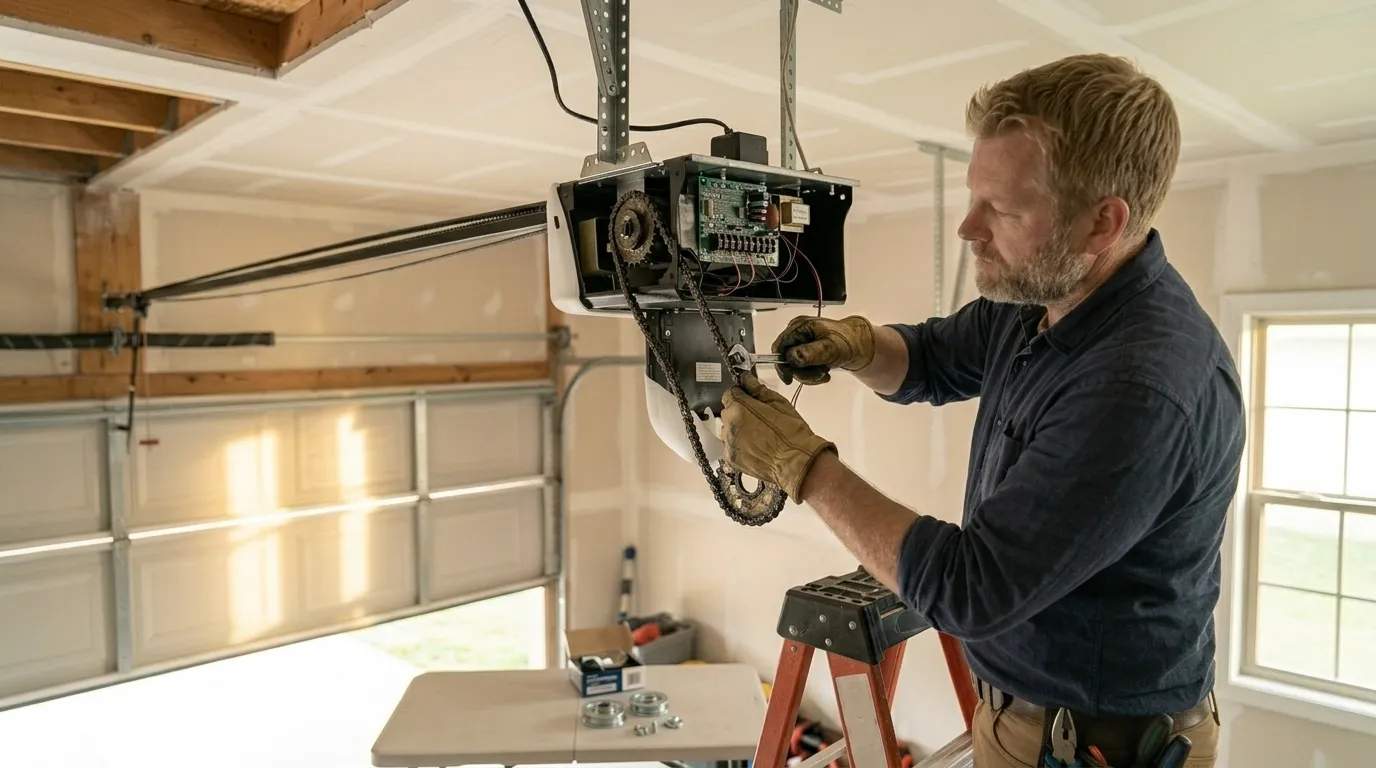
Fixing a door on a house from this era usually means matching parts to specs nobody printed on a website - torsion spring wind direction, wire diameter, and drum size specific to what was installed when the house went up. We measure onsite rather than guess from age alone, because even within a single build year, installers used different hardware. If the opener is original chain-drive equipment from the 1960s, replacement is almost always the right call rather than repair - parts for units that old are scarce and the safety features on anything that age don't meet what's standard now.
Springs, cables, and rollers we can usually match or replace outright. What we won't do is force a modern universal spring onto a torsion bar it wasn't rated for just to save a trip back out.
Talk to a Allendale Technician First
Describe what the door is doing and get a straight answer on what it likely needs.
Other Garage Door Services in Allendale
Recent Work in Allendale
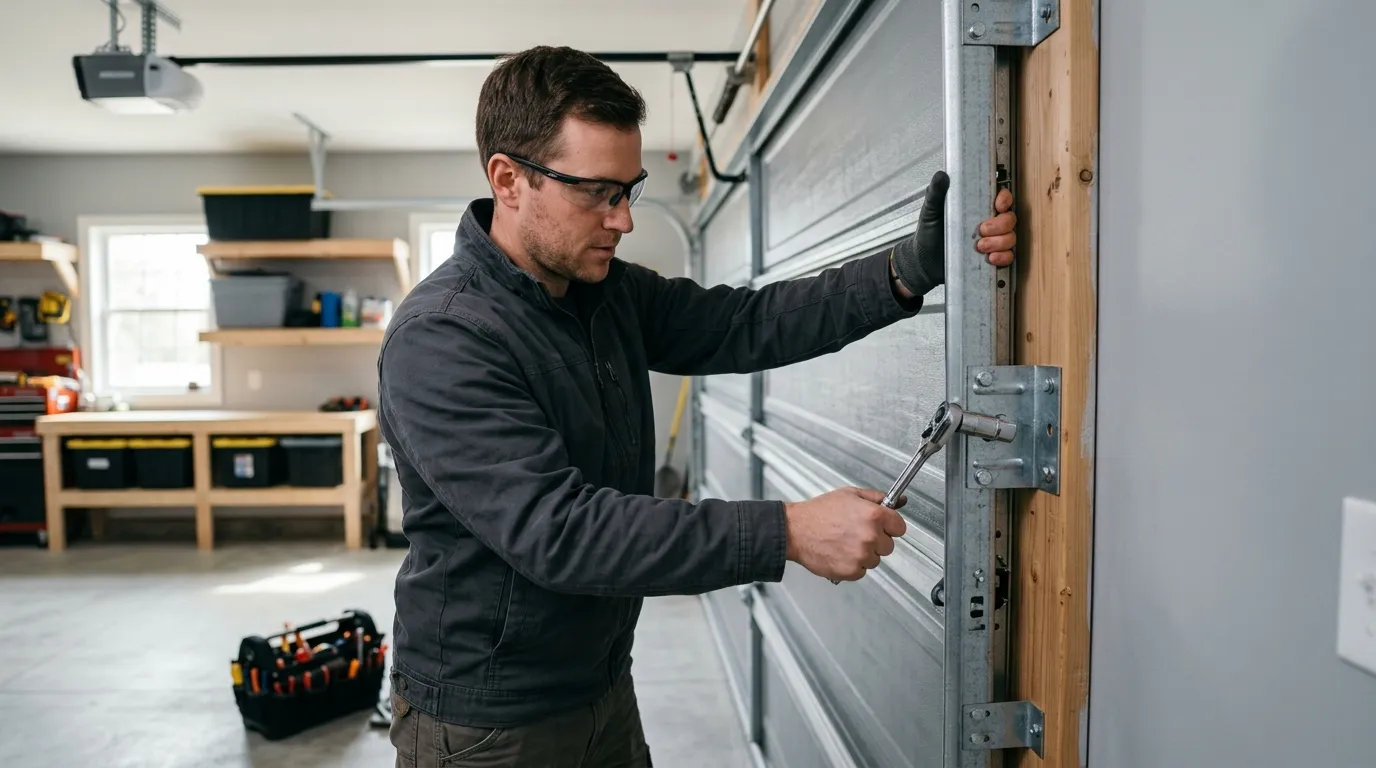
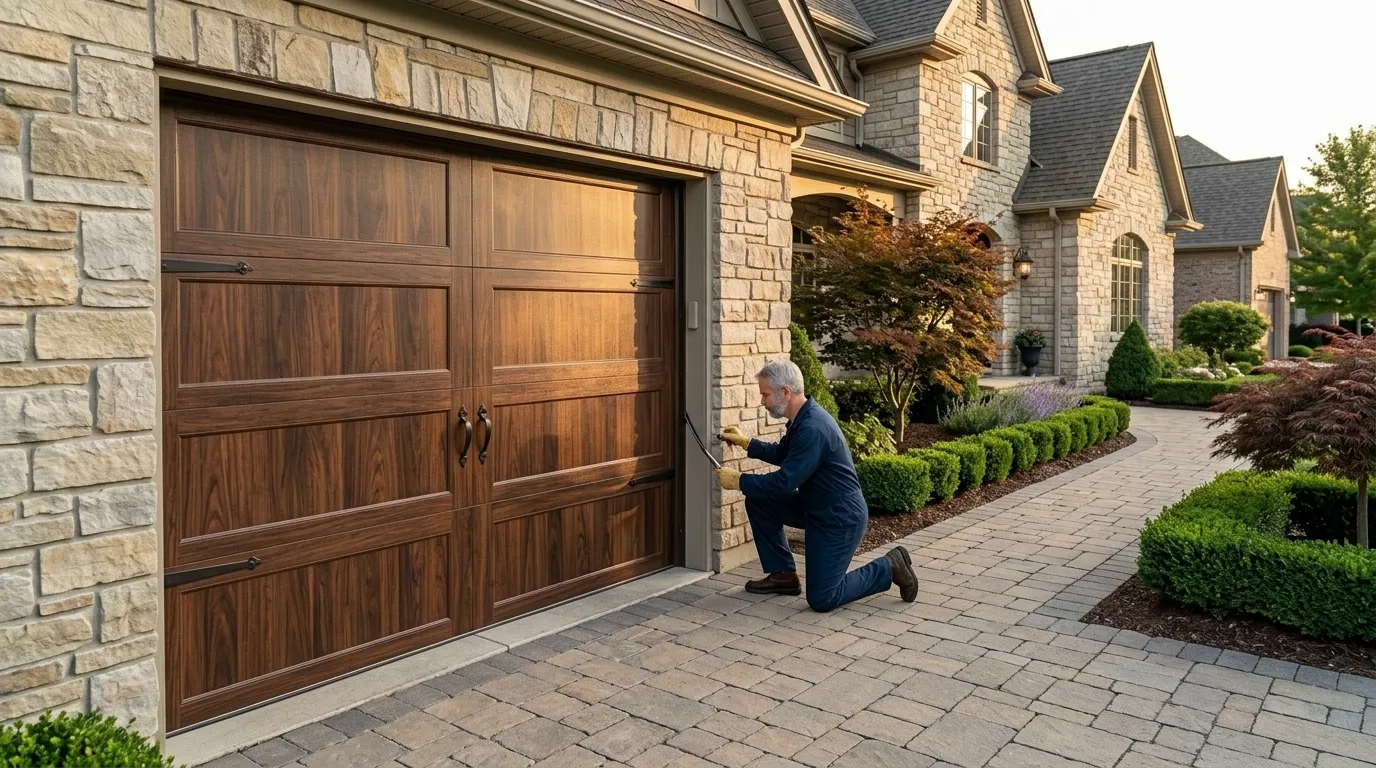
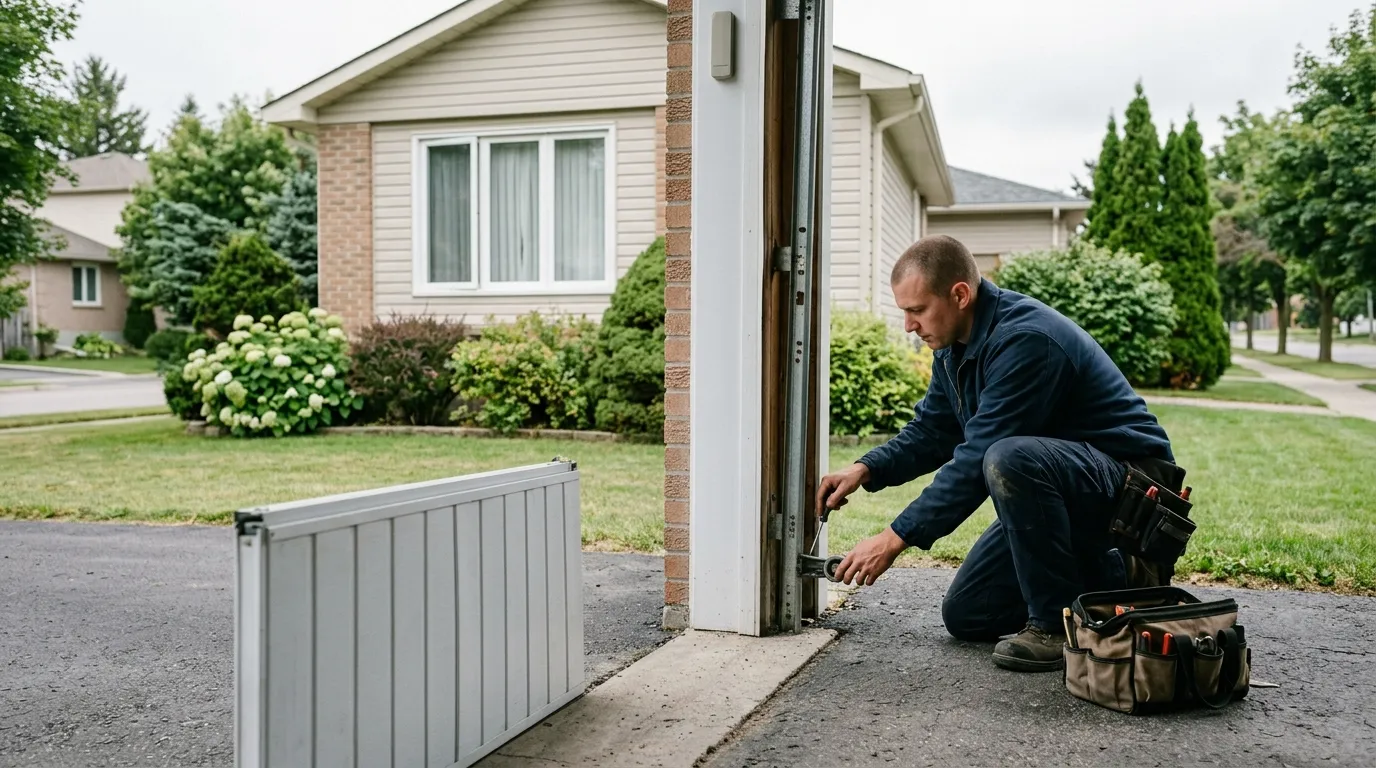
A look at jobs our crew has been on nearby.
Why Allendale Calls Us
Frequently Asked Questions
Is my garage door original to my house if it was built in 1966?
It's possible, especially the track and torsion hardware, since those components can last decades if never stressed past their limit. Openers are less likely to be original - chain-drive units from that period rarely survive this long. The safest way to know is to have the spring wind and drum measured rather than assume based on the house's age alone.
Why do springs seem to fail more in winter here?
Cold, severe winters stiffen steel and reduce the give in a torsion spring that's already fatigued from decades of cycles. A spring that's been slowly weakening for years often lets go on the coldest morning of the season rather than a mild one, simply because cold steel has less flex left in it.
Do you have a branch in Allendale?
No. We run out of Wyckoff, about three miles away, and cover Allendale along with the rest of the surrounding towns from that one location. There's no separate depot or stocked branch here, so we bring parts based on what you tell us about the door when you call.
Should I repair or replace an original 1960s opener?
Replace it. Chain-drive openers from that era don't have the safety sensors required on units sold today, and parts for them are scarce. Springs, cables, and track hardware are usually repairable, but an original opener from the 1960s is past the point where fixing it makes sense.
Need Garage Door Repair in Allendale?
Call now for straight answers on cost and timing.