
Wyckoff Garage Door Guide
Why Your Garage Door Jumps Its Track
Wyckoff homes built mostly in the 1960s pair original track hardware with cold-climate ice and thaw cycles. Here's why doors jump track and when to call.
- Licensed & Insured
- Same-Area Service Calls
- Upfront Pricing
When to Call Someone
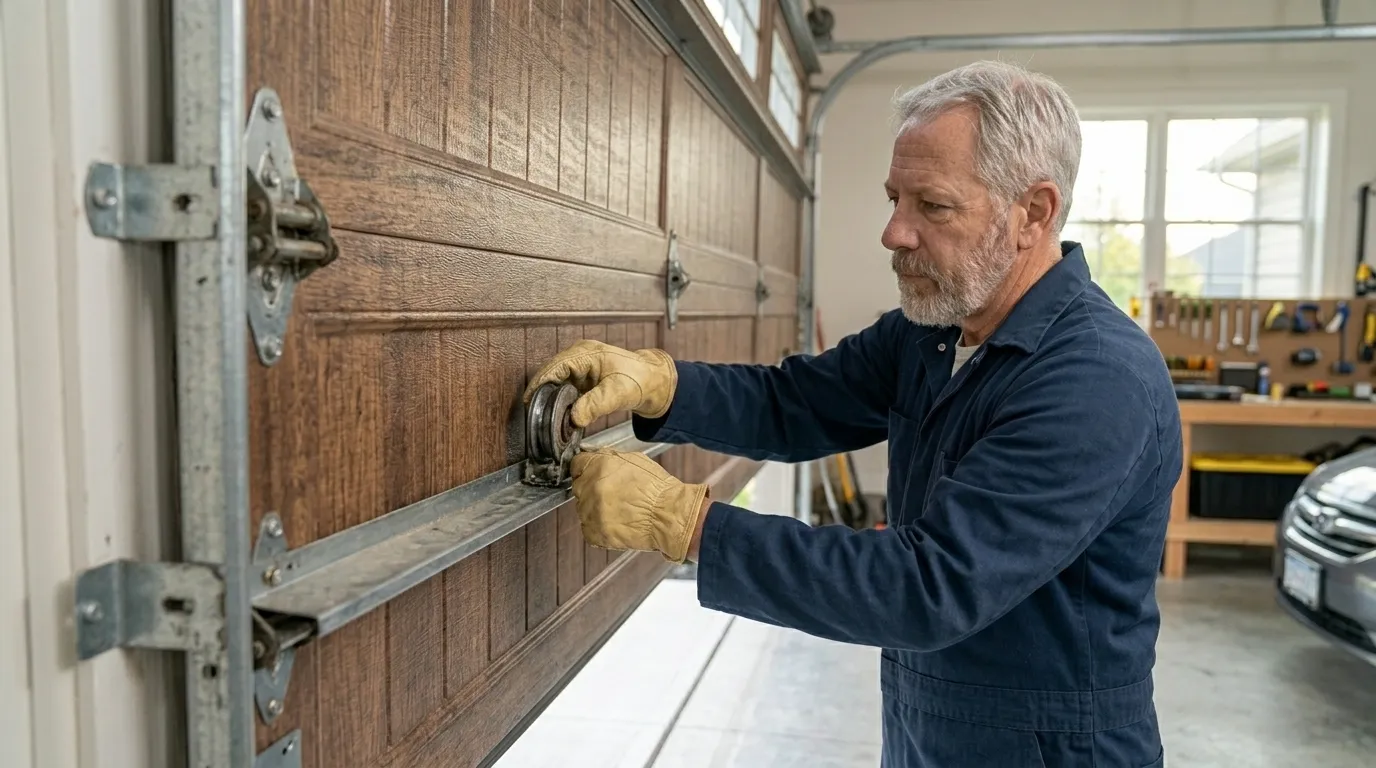
If the door is hanging at an angle, if you hear a bang followed by the door refusing to move, or if a cable has come off a drum, stop using the opener and call. Running the opener against a door that's off track can bend the track itself or tear the bracket out of the framing, and that turns a $200 repair into a full track-and-hardware replacement. A door that's merely noisy or slow to close usually isn't an emergency - it's worth a call, but you don't need to leave the car in the driveway overnight.
The honest limit here: if a track is bent in more than one spot, or the section it's bolted to has pulled away from cracked or soft wood framing, we're not going to hammer it straight and call it fixed. On a lot of the framing we see from this build era, that's a replacement job, not a repair.
The Situation
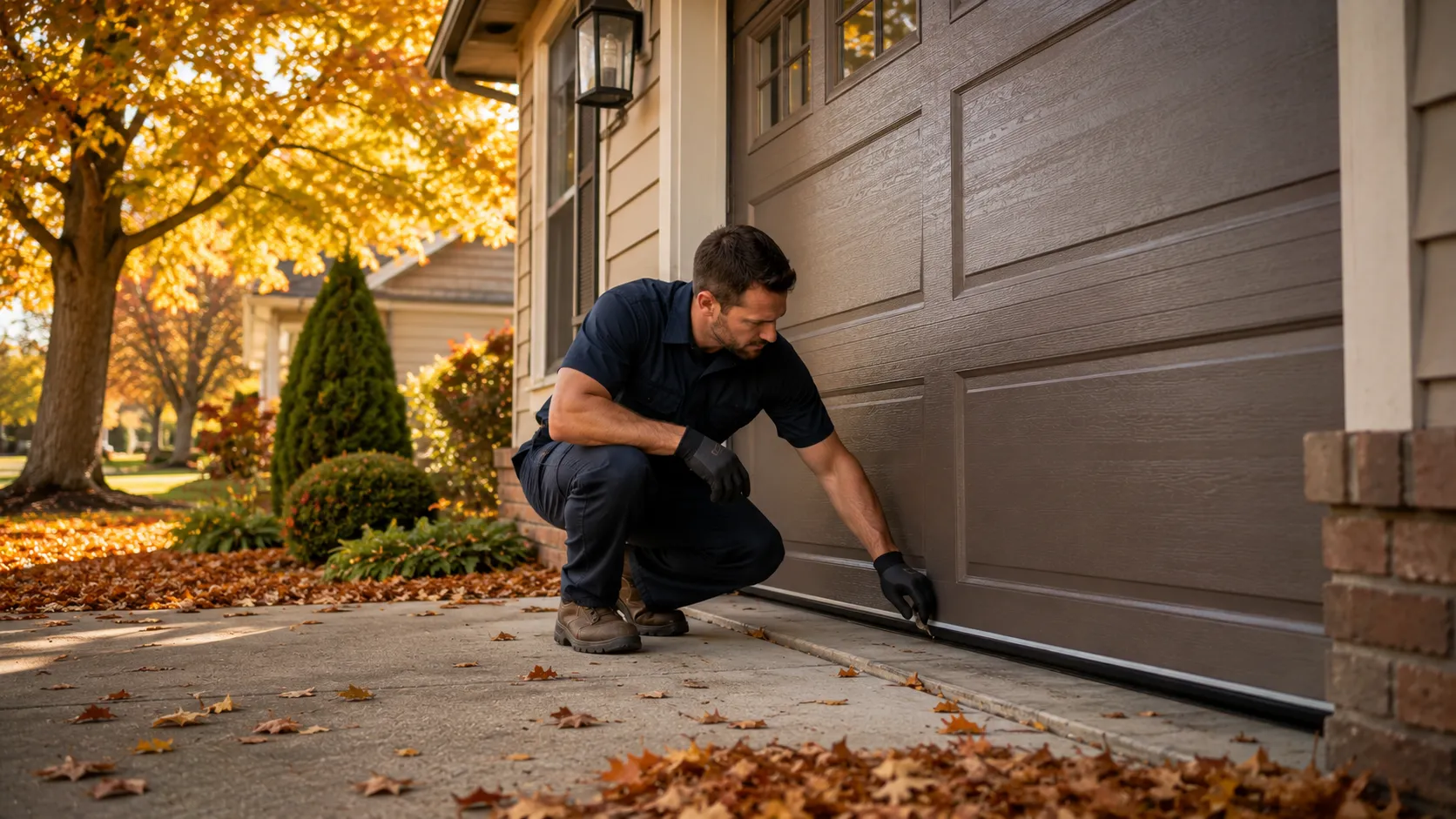
Wyckoff's housing stock runs 1938 to 1996, with the median build year around 1960, and most of what we work on across this stretch of towns sits in that 1960s-70s window. That matters for one specific reason: track brackets and roller hardware from that era were sized for lighter doors than what's sold today, and thirty, forty, fifty years of thermal cycling has loosened the lag screws holding brackets to jamb framing.
A door can look fine sitting still and still walk off the track the moment it's asked to do real work - opening against wind load, or closing on a track that's racked a quarter inch out of square. We see this pattern often enough on original-era hardware that it's one of the first things we check, ahead of springs or cables.
Season by Season
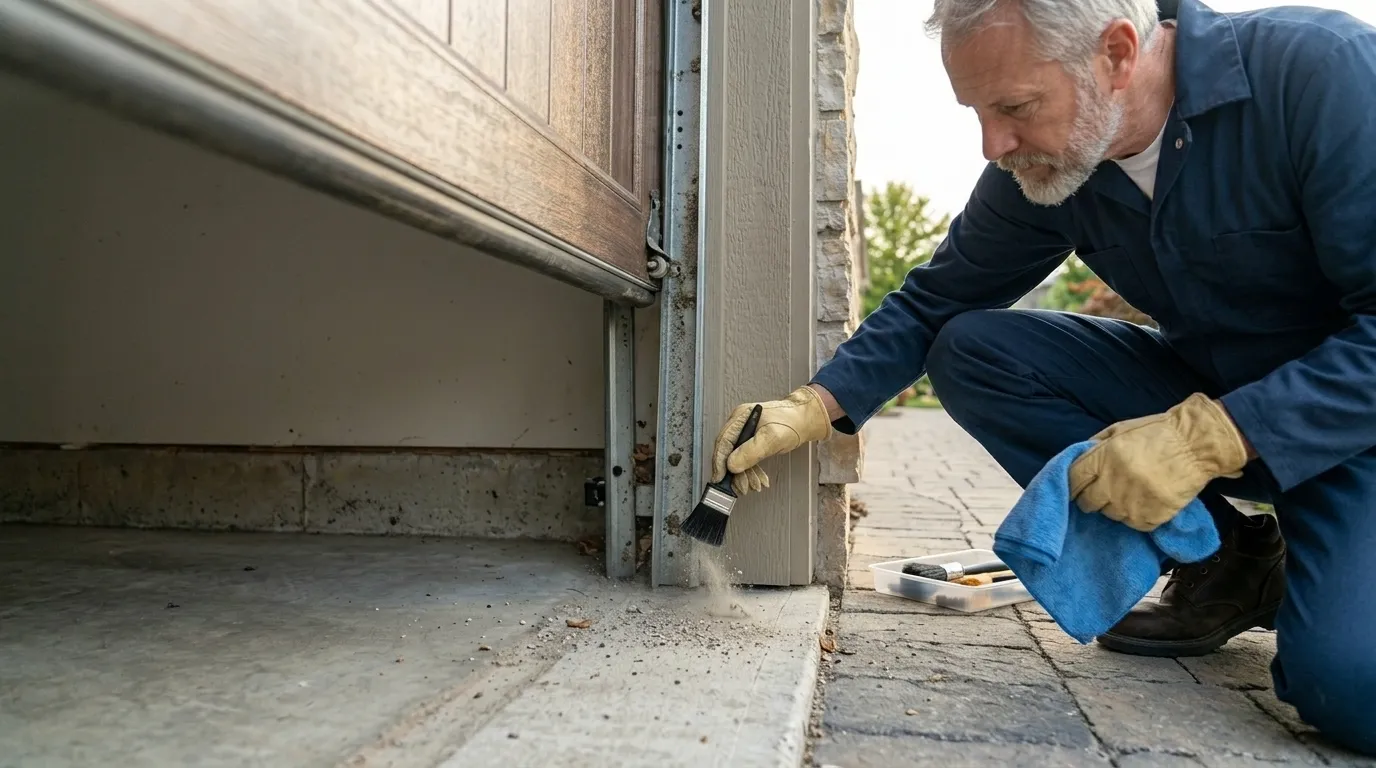
This is a cold-climate service area, and that shows up in the track hardware on a predictable schedule. Late fall, temperature swings shrink the wood framing the brackets are lagged into, and screws that were snug in August back out just enough to let the track lean. Deep winter is when doors actually jump: rollers running in a track that's collected packed ice or road salt brine dragged in on tires bind up, then break loose all at once and knock the roller out of the channel.
Early spring thaw does the opposite damage - framing swells back, which can rack a track that was already slightly bent over the winter. Summer is the quiet season for track failures here; if something's going to go off track in this climate, it's almost always October through April.
How Local Conditions Play In
With 291,433 owner-occupied houses across this part of Bergen County and most of them dating to the same postwar building boom, the track problems we see aren't random - they cluster by construction era. Homes built before local codes tightened up on garage framing often have thinner jamb studs, which means the lag bolts holding track brackets have less wood to bite into, and less margin before a bracket pulls loose under cold-weather strain.
A severe cold climate means that strain repeats every winter, not once. None of that means every older door is a ticking clock, but it does mean a track that's slightly loose in November is worth tightening before the first hard freeze, not after the door's already jumped.
How We Can Help
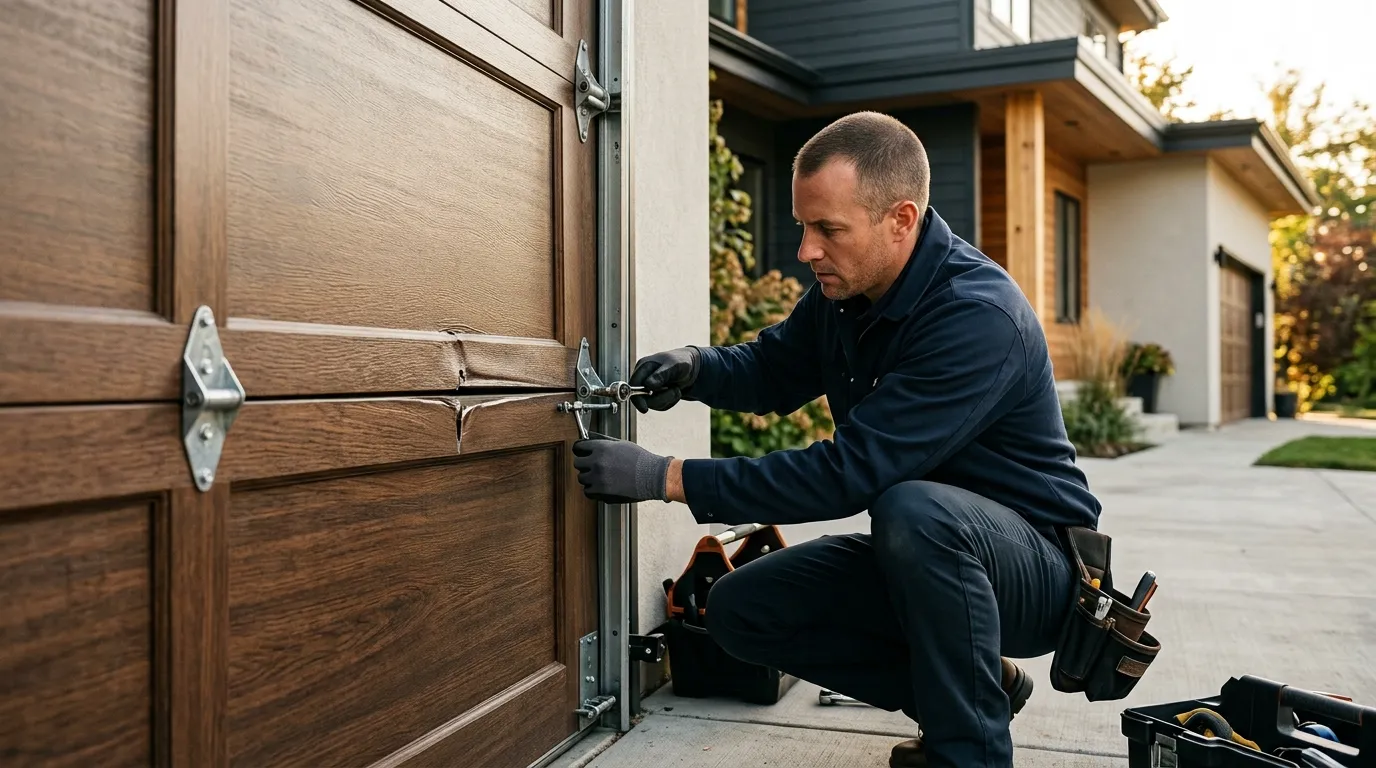
Garage Door Panel Replacement
Dented or cracked panels swapped without replacing the whole door where the frame is sound.
Learn more →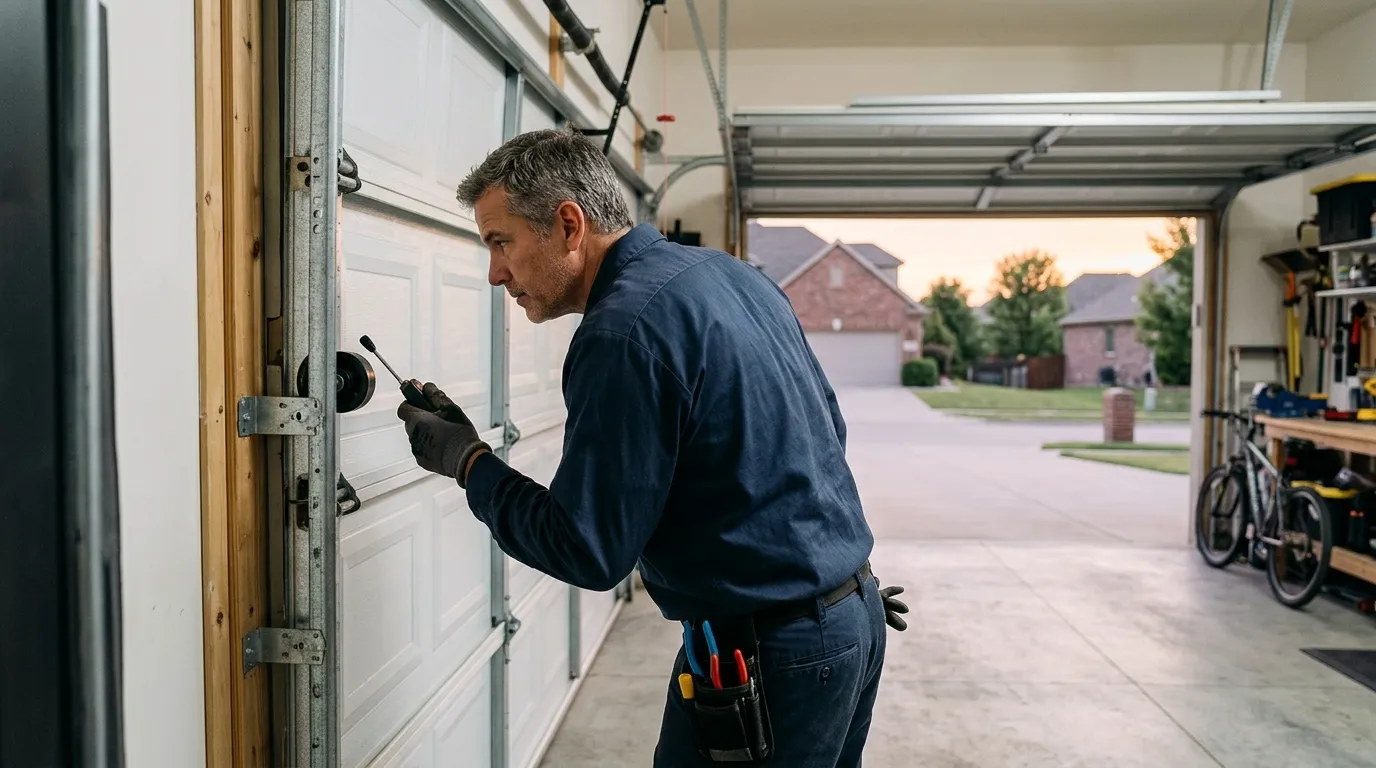
Garage Door Service
Tune-ups, lubrication, and safety checks that catch a small problem before it becomes a service call.
Learn more →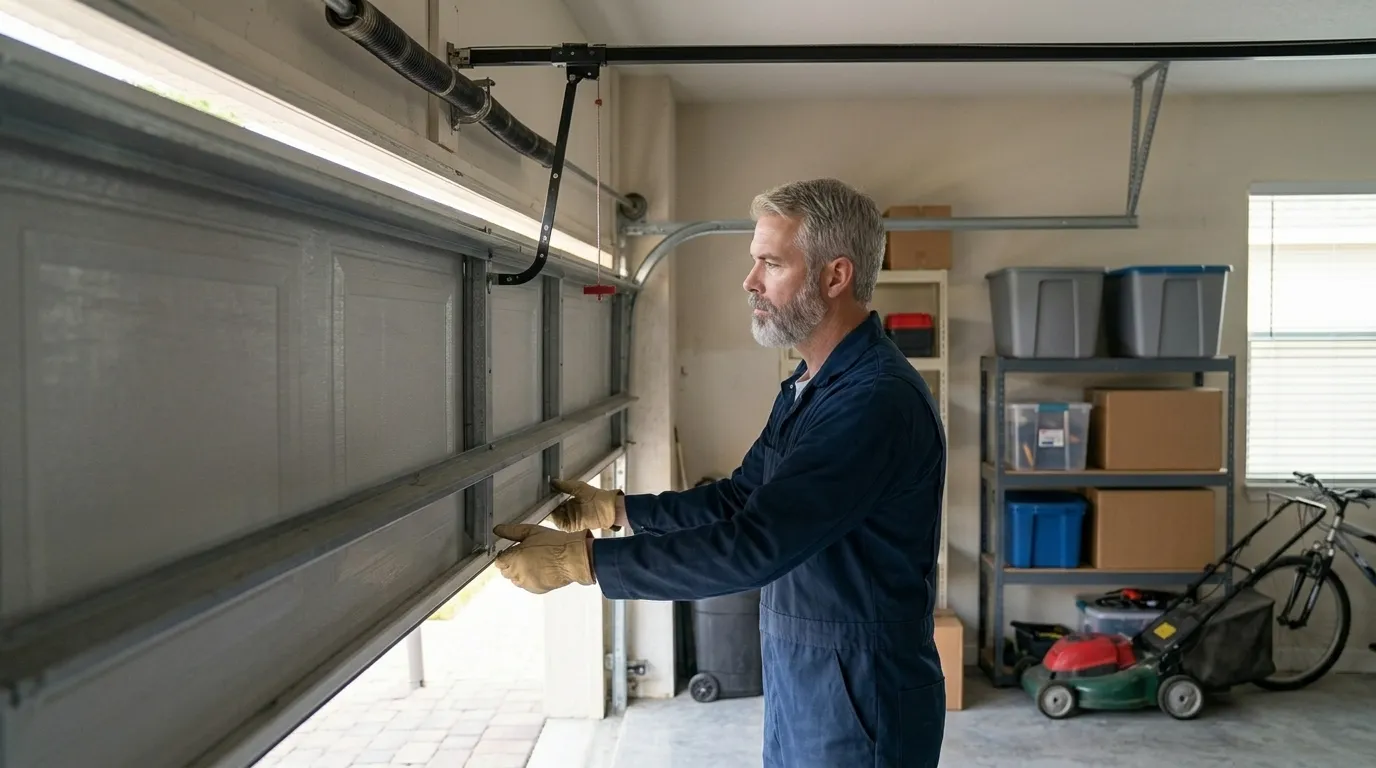
Garage Door Spring Repair
Broken torsion and extension springs replaced and the door rebalanced in the same visit.
Learn more →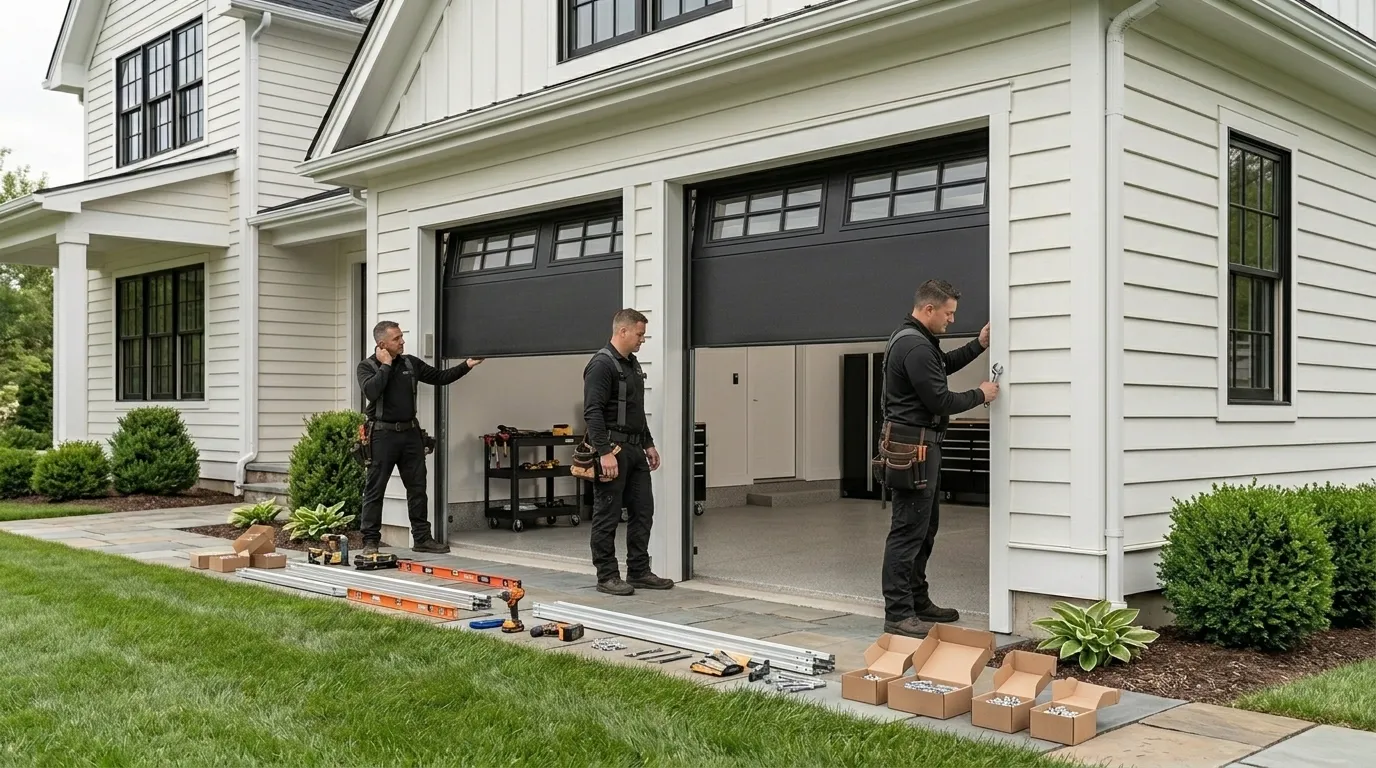
Garage Door Installation
New sectional doors sized and installed for the housing stock actually built in this area.
Learn more →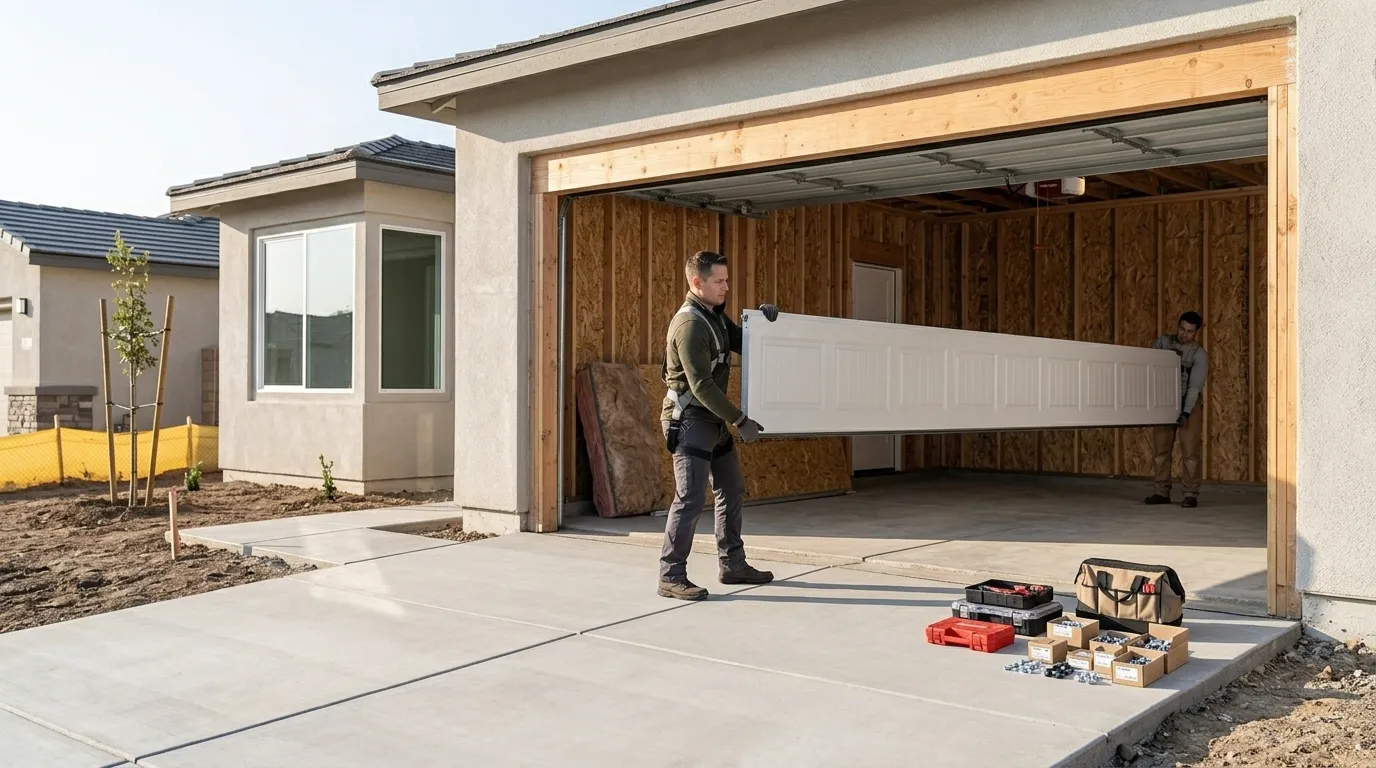
Garage Door Opener Installation
New openers sized to your door and set up with the safety sensors dialed in.
Learn more →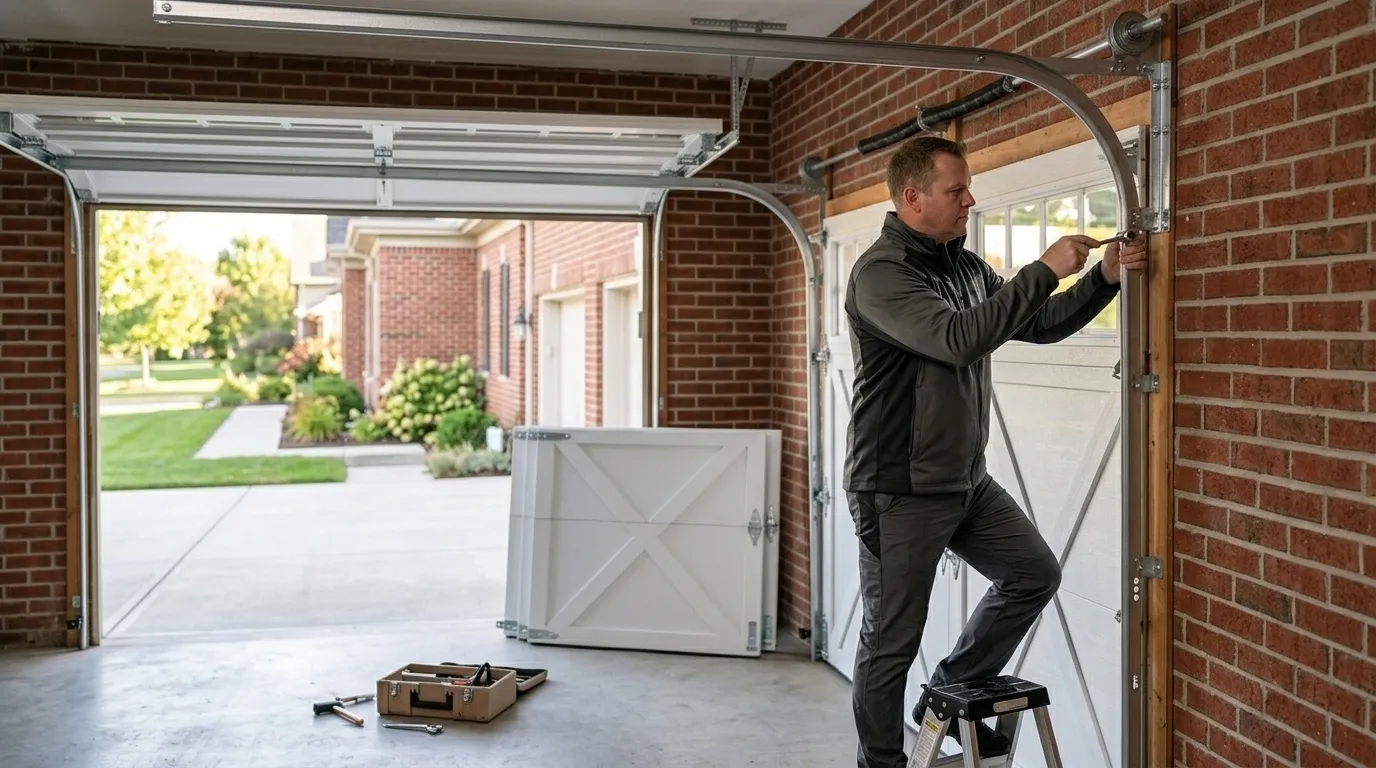
Garage Door Opener Repair
Openers that hum, stall, or reverse - diagnosed and fixed, from worn gears to logic boards.
Learn more →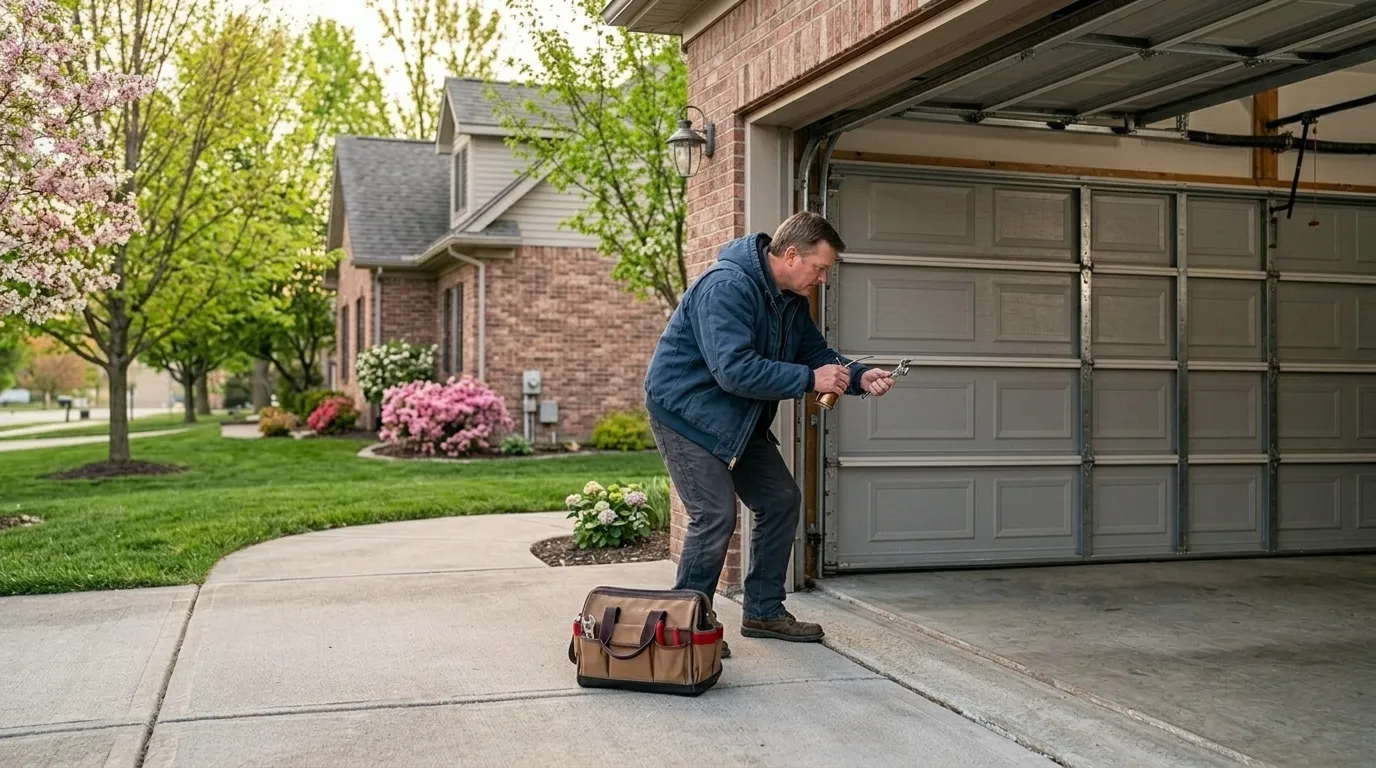
Garage Door Off Track
Doors that jumped the track reset safely, with rollers and alignment checked so it holds.
Learn more →
Garage Door Repair
Springs, cables, tracks, rollers, and openers fixed by a tech who explains the problem before touching anything.
Learn more →Frequently Asked Questions
Why did my garage door suddenly jump off the track in the cold?
In a cold climate like this one, packed ice or road salt brine in the track channel can bind a roller, then release it suddenly under the opener's pull. The roller pops sideways out of the channel instead of running through it. It's more common in deep winter here than any other season.
Is a bent track always a replacement?
Not always, but if it's bent in more than one place, or the bracket has pulled loose from framing that's gone soft with age, straightening it usually doesn't hold. On houses from Wyckoff's 1960s-era building stock, we'll often find both problems together.
Can I just push the door back onto the track myself?
You can try, but the risk is real - torsion springs and cables are under load even when the door looks still. If a cable is off the drum, don't touch it. Call and we'll walk you through what's safe to check before we get there.
Have a Door That Needs a Second Opinion?
Call and describe what it is doing - we will tell you what it likely is.