Wyckoff, NJ · Garage Door Service
Serving Totowa homes built mostly in the late 1950s with original hardware. Torsion spring, opener, and panel repair from our Wyckoff crew, 8 miles out.
We drive out to Totowa from Wyckoff, about 8 miles, and most of what we find on arrival traces back to the same thing: houses here went up around 1958, which puts a lot of them right in the middle of the postwar building wave that swept this part of Bergen and Passaic County. That means original torsion springs that have outlived three or four openers, and steel doors with hardware that predates the lighter rollers and safety cables you'd see on anything built after the 1990s.
On a street of 1958 construction, the garage itself is usually undersized by today's standard, which means single-car doors on some lots and narrow double-door openings on others. We size springs and openers to that opening, not to a generic big-box kit. A lot of the calls we take here are homeowners who bought a universal replacement spring online and found out the hard way that it didn't match the drum size on their original torsion tube.
We don't stock every legacy part on the truck. If a door from this era needs an obsolete track bracket or a discontinued panel profile, that's a special order, and we'll tell you that up front rather than promise a same-day fix we can't deliver.
The most common call from Totowa is a spring that let go without warning, usually on a door that's been opened and closed the same way for decades without anyone touching the hardware. Second most common is an opener that's grinding or reversing on its own, which on a house this old is often the motor gears wearing out rather than anything electronic.
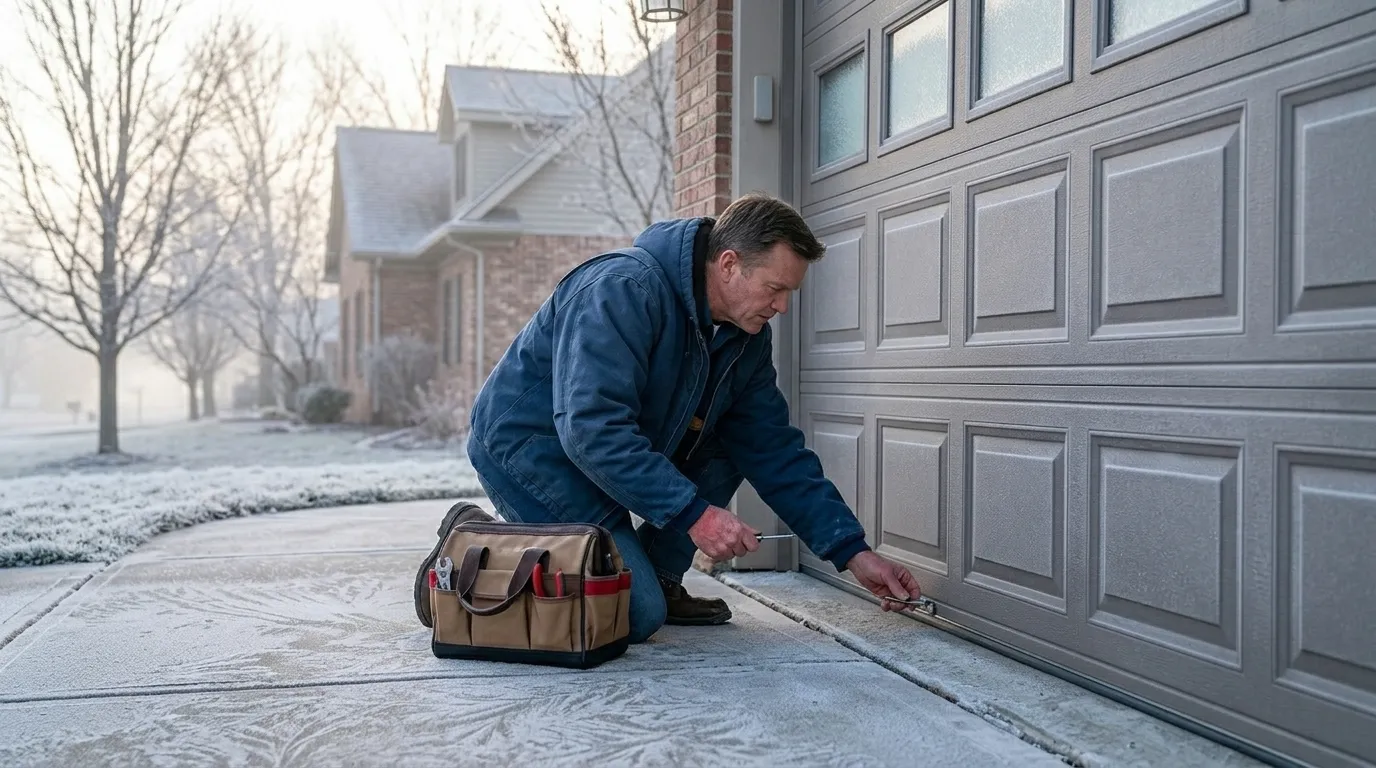
We also hear from people whose door is fine most of the year but sticks or drags for a few weeks each winter. On a cold-climate door with 1950s-era weatherstripping and a steel panel that's flexed for over sixty years, that seasonal tightening at the track is normal wear, not a sign the whole door needs replacing. We check track alignment and roller condition before we ever quote a full replacement.
Households here run a median income around $114,177, and we see that reflected in the calls: people want the door fixed right, not the cheapest patch, but they also want a straight answer on whether a repair is worth it versus a new door. We give that answer without padding the invoice.
A door built to match a 1958 opening doesn't behave like a door built to a 2005 opening. The steel gauge is different, the track depth is different, and the torsion spring wind count was set for a heavier, thicker panel than most manufacturers use now. When we replace a spring on one of these doors, we match the wind to the original door weight, not to a modern lightweight replacement panel, unless the homeowner is replacing the whole door at the same time.
Cold-climate severity in this part of New Jersey also matters more on older doors. A door from this era typically has less insulation than anything sold today, and the wood jambs some of these garages still have can shift slightly with frost, which throws off door alignment at the top corners. That's a five-minute adjustment if you catch it early. Left alone for a season or two, it turns into a bent track and a call to us.
We're honest that not every fix on a door this age is a repair worth doing. Past a certain point, chasing parts for a panel that's been discontinued for twenty years costs more than replacing the door.
Totowa's housing stock centers on 1958, squarely inside the 1938-1996 range across our wider coverage area but on the older end of it. That matters for garage doors specifically because anything built before the mid-1960s is more likely to have a single-car bay, a side-mounted torsion spring rather than the center-mounted setup common later, and an opener that's been swapped out once or twice already without the track or hardware ever being upgraded to match.
With roughly 3,892 households in the area, it's a smaller, denser mix of streets than some of our other coverage, and a lot of driveways sit close enough that door height and setback were built to tighter specs than you'd get in a newer development. We take that into account when we quote a replacement door, since off-the-shelf sizing doesn't always fit a 1958 opening without trim work.
We travel to Totowa from our base in Wyckoff for both repair and replacement calls, and we quote the job based on what's actually on the wall, not a standard package.
On a door built around 1958, the torsion spring has usually been cycling for decades longer than its rated life, even if it looks fine. Springs fail by fatigue, not by visible wear, so there's rarely a warning sign. If your house is original construction from that era, we assume the spring is original too until we see otherwise.
No. We run out of Wyckoff, about 8 miles away, and bring the parts we expect to need based on the job you describe when you call. For common repairs like springs, cables, and rollers that's rarely an issue. For a discontinued panel or an obsolete track bracket, we may need to special order.
Depends on what's broken. A spring, cable, roller, or opener motor is almost always worth repairing on an otherwise sound door. If the panels themselves are rusted through or the track is bent beyond adjustment, replacement usually costs less over time than chasing parts for a door this age.
Older wood garage jambs, common on houses from this era, can shift slightly with frost and throw the track out of alignment at the top corners. In a cold-climate winter that's a common seasonal complaint. It's usually a quick track adjustment, not a sign the door needs replacing.
Call now or request a free quote - same-day service on most repairs, upfront written pricing.