Wyckoff, NJ · Garage Door Service
Wyckoff Garage Door Pros travels 12 miles to Teterboro for garage door repair and opener service on the area's newer 1991-era housing stock.
Teterboro doesn't look like most of the territory we cover out of Wyckoff. The housing here centers on 1991, roughly thirty years newer than the 1960 median across the rest of the service area. That gap matters more than it sounds. A door and opener put up in the early 1990s is a different animal from the one-piece doors and older hardware still hanging on in the towns built in the 1950s and 60s closer to home.
We make the 12-mile run from Wyckoff to Teterboro for opener repair, spring replacement, and track and roller work, same as anywhere else in our coverage area. The difference is what's actually failing. On 1991-era construction we're usually looking at a sectional steel door on torsion hardware that's now over thirty years old - springs at the end of their rated cycle life, openers with drive systems that were new technology when the house was built and are obsolete now. We don't stock every part for every opener made in that era, so on some calls we're ordering in a gear kit or a logic board rather than fixing it same visit. That's worth knowing before you book.
There are only 35 households in Teterboro, which makes it one of the smaller pockets we drive to. Call volume here is lower than in denser parts of our territory simply because there are fewer doors to fail. When we do get a call, it tends to be an opener issue rather than a spring snap - the torsion springs on doors from the early 1990s are built to a longer service life than the extension springs common on older housing stock, so they fail less often but the openers of that generation are further along in their own wear cycle.
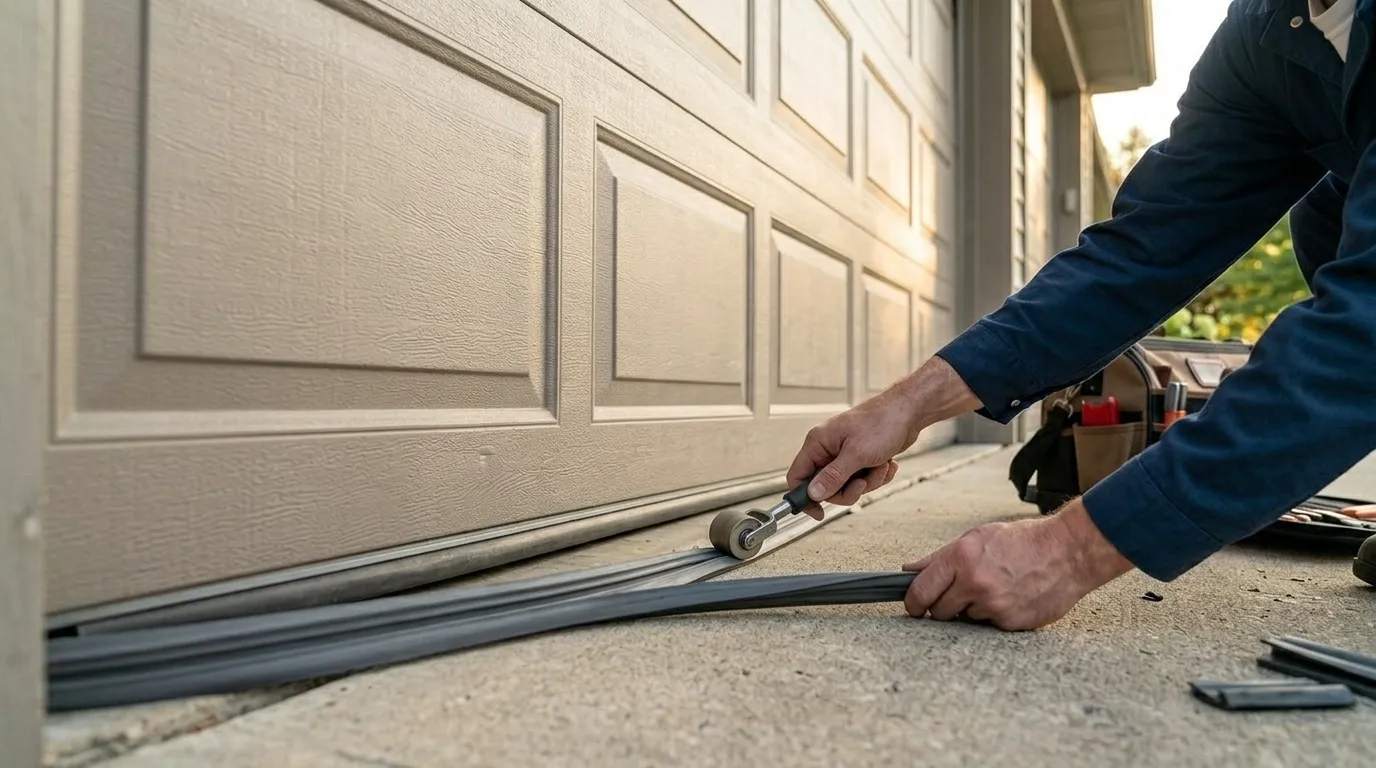
We also see more requests for weatherstripping and bottom seal replacement than for full spring jobs. A door built in the early 90s in a cold-climate area has usually gone through three decades of freeze-thaw cycling on its seals before anyone notices the gap under the door letting in draft. That's a smaller job than a spring replacement, but it's the one that actually gets called in most from this area.
The service area sits in a cold, severe winter climate, and that affects torsion-spring doors differently depending on their age. A door from the 1990s with factory-lubricated torsion springs and a steel jamb doesn't need the kind of retrofit that a 1960s one-piece door does, but three decades of cold-weather cycling still stiffens the spring's coating and slows the rollers. What we typically find on a Teterboro call is a torsion system that's never been serviced, running dry, with the opener compensating by working harder until it burns out a gear or a capacitor.
The honest answer on these doors is that a full opener swap is often the better call than a repair once the drive system starts failing intermittently - parts for openers from that era aren't always available new, and chasing an intermittent fault on a 30-year-old logic board can cost more in return visits than a replacement unit would. We'll tell you straight if that's where a job is headed instead of stringing along a repair that won't hold.
Across the wider area we cover from Wyckoff there are 921,135 households and a median income of $126,221, but Teterboro itself is a small outlier within that - just 35 households, and no reliable income figure for the area on its own. That's part of why this isn't a place with a lot of repeat call history to draw patterns from; each job here is closer to a one-off than a routine.
What we can say with confidence is the housing age: median build year 1991, newer than almost anywhere else we service from Wyckoff. That means torsion springs as standard, steel sectional doors rather than older wood or one-piece designs, and openers that are now old enough to be failing on electronics rather than mechanics. If you're calling about a door here, it's worth mentioning the approximate age of the house up front - it changes what we bring on the truck.
Most of the houses here were built around 1991, which is much newer than the 1960 median across the rest of our territory. That means torsion springs and steel sectional doors as the standard setup, not the older one-piece doors and extension springs common in older housing stock nearby. The failures we see are mostly opener wear, not spring snaps.
It's about 12 miles, which is on the longer end of the trips we make. We still service openers, springs, tracks, and rollers there - it just means we plan the visit rather than treating it as a quick add-on stop.
Not always. Openers from the early 1990s sometimes use gear kits or circuit boards that aren't stocked on the truck, so a repair on that generation of unit may take a return visit to complete. We'll tell you upfront if that's likely before we start the job.
Depends on what's failing. If it's a worn gear or a dead capacitor, repair usually makes sense. If the logic board is acting up intermittently, a new opener is often cheaper in the long run than chasing an electronics fault on a 30-year-old unit. We'll give you the honest read on-site.
Call now or request a free quote - same-day service on most repairs, upfront written pricing.